5th Bomb Wing Public Affairs
MINOT AIR FORCE BASE, N.D. — Airmen from Minot Air Force Base facilitated a successful test launch of an unarmed Minuteman III Intercontinental Ballistic Missile (ICBM) on March 3 as part of Glory Trip 255 (GT 255) at Vandenberg Space Force Base, Calif., reaffirming the reliability of the United States’ land-based nuclear deterrent.
Glory Trip missions are operational test launches in which missile crews from active-duty bases travel to Vandenberg SFB to simulate real-world conditions and validate the readiness, accuracy and reliability of the Minuteman III system.
GT 255 was scheduled several years in advance to support ongoing modernization efforts including the LGM-35A Sentinel ICBM.
“Test launches are the most visible and vital way we verify our capabilities and validate the performance of our systems,” said U.S. Air Force Col. Dustin Harmon, the 377th Test and Evaluation Group (377 TEG) commander. “The men and women of our missile community represent some of the most highly trained professionals in our nation’s defense. These tests confirm their unmatched ability to support this critical mission and provide crucial data that ensures our systems remain ready and reliable.”
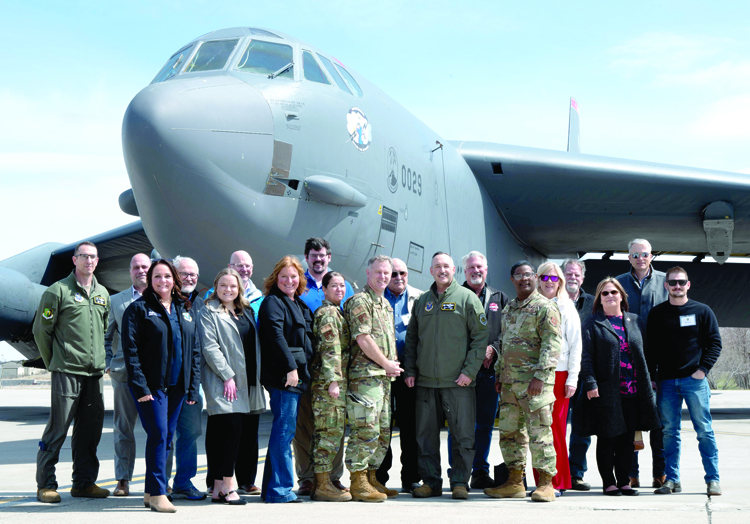
Minot AFB provided a previously fielded Minuteman III ICBM along with missile maintainers and operators from across their various squadrons who mobilized to operationally support this test. The team of selected Airmen were also accompanied by five vectored civilians who enrolled in the 91 MW’s inaugural Bully Trailblazer Course that provided the members a week-long deep dive into missile wing operations and capstoned with GT 255’s successful launch, showcasing the full spectrum of the wing’s mission set.
“I’m proud of our Rough Rider Airmen whose hard work and professionalism helped make Glory Trip 255 a success,” said U.S. Air Force Col. James L. Schlabach, 91MW Commander. “Their efforts demonstrate the dedication it takes to sustain a safe, secure and effective nuclear deterrent. Our Rough Riders work diligently but it’s not every day that they get the opportunity to participate in an operational test launch. A Glory Trip lets them see the fruits of their labor; this is the tangible result of their impact.”
It takes months of preparation and coordination among multiple government partners and operational units across the missile enterprise to ensure successful launches. For GT 255, Airmen from the 91 MW provided direct maintenance support to ensure the missile was properly configured and prepared for launch. Meanwhile, missile combat crew operators from across all three missile wings executed the launch procedures.
The mission was overseen by the 377 TEG at Vandenberg SFB. Following the launch, the 377 TEG will analyze the data collected and distribute it to a wide range of stakeholders, including the United States Department of War, the United States Department of Energy and United States Strategic Command.
“It is critical to test all aspects of our ICBM force, including our ability to deliver multiple, independently targeted payloads with absolute precision,” said U.S. Air Force Gen. Stephen L. Davis, Commander of Air Force Global Strike Command. “This test validates the intricate synchronization of the weapon system, from the initial launch sequence to the flawless deployment of each reentry vehicle.”
For GT 255’s launch, the ICBM’s two reentry vehicles traveled thousands of miles across the Pacific Ocean before reaching a predetermined target area near Kwajalein Atoll in the Republic of the Marshall Islands.
The long-range flight enabled the 377 TEG to collect invaluable data regarding the missile’s accuracy, reliability and overall performance. By analyzing the trajectory, guidance and reentry behavior of the vehicles, each component of the Minuteman III weapon system continues to perform as designed. More than 300 similar tests have been achieved in past decades.
As the Air Force prepares to transition to the Sentinel ICBM, events like GT 255 remain essential to maintaining confidence in the current system while informing the next generation of strategic deterrence. Through rigorous testing and careful analysis, the missile enterprise continues to ensure the nation’s land-based nuclear deterrent remains safe, secure and effective.