JoAnne Rademacher, Northern Sentry Contributor
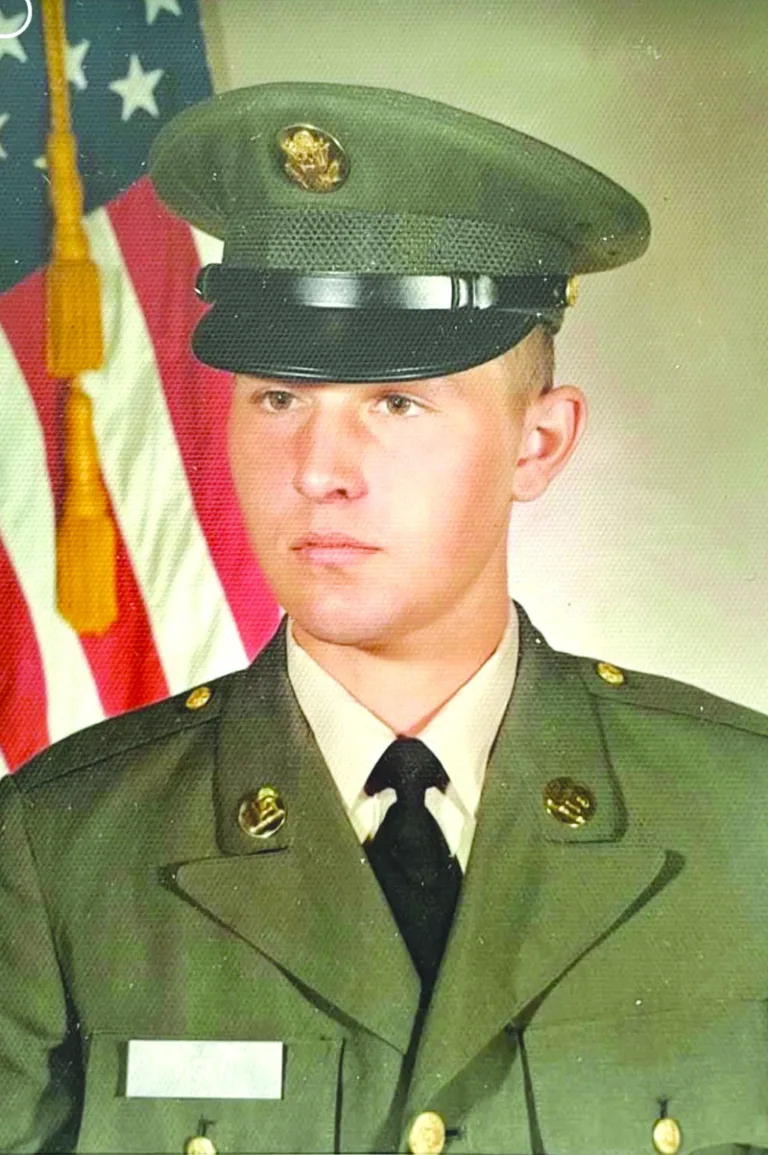
The year was 1974. It was the year of Watergate, Muhammad Ali vs. George Foreman, Good Times and Happy Days, Joni Mitchell and Johnny Cash. It was also the year Bradley Morris Vigen joined the North Dakota National Guard.
Brad was with his friend Robin, when Charlie, Robin’s dad, asked the boys, “What are you kids going to do after high school? Go down to the armory and see Dick Wolff. Take the aptitude test and see what you can do.” Charlie was a 1st Sergeant in the National Guard, so it seemed like sound advice. Brad and Robin followed through, and both soon enlisted in the National Guard on the buddy system.
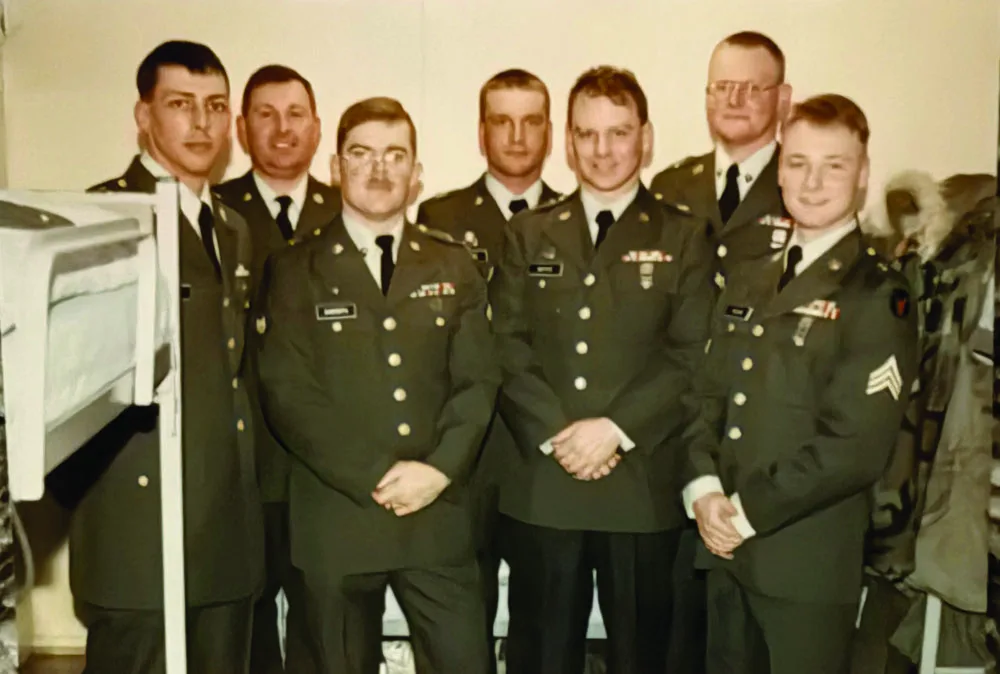
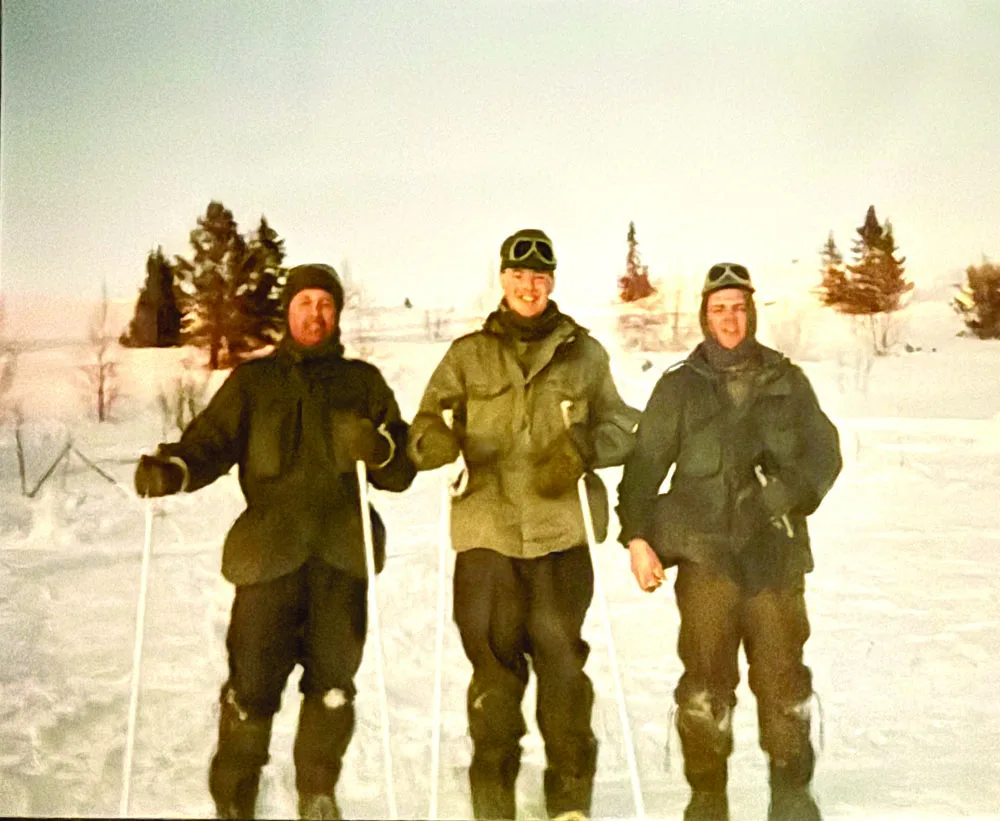
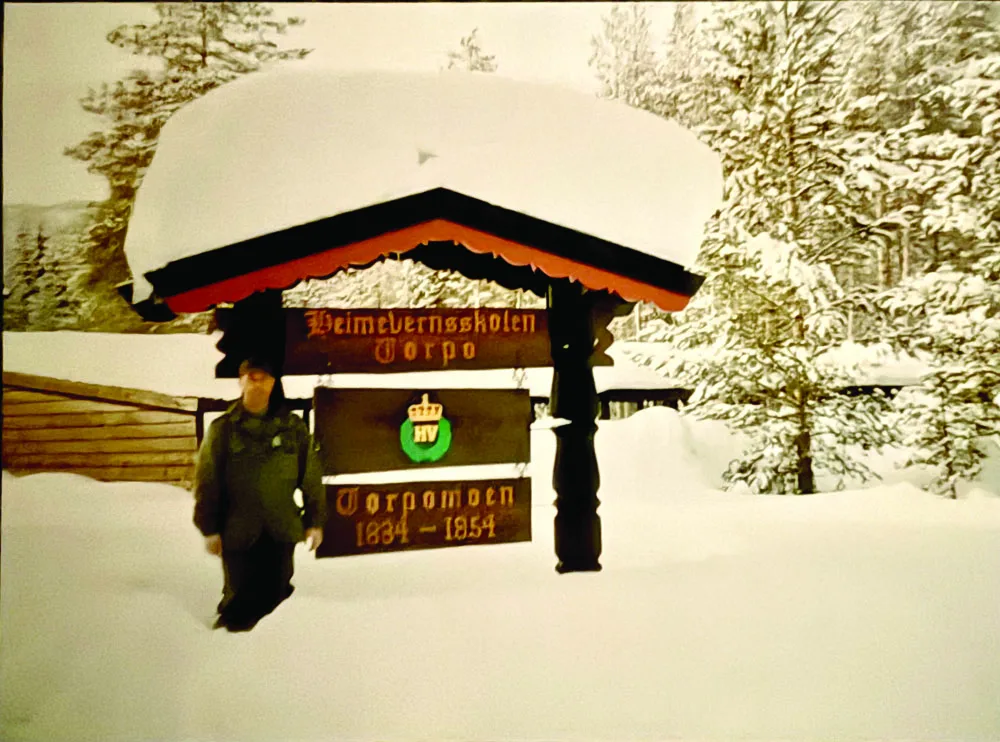
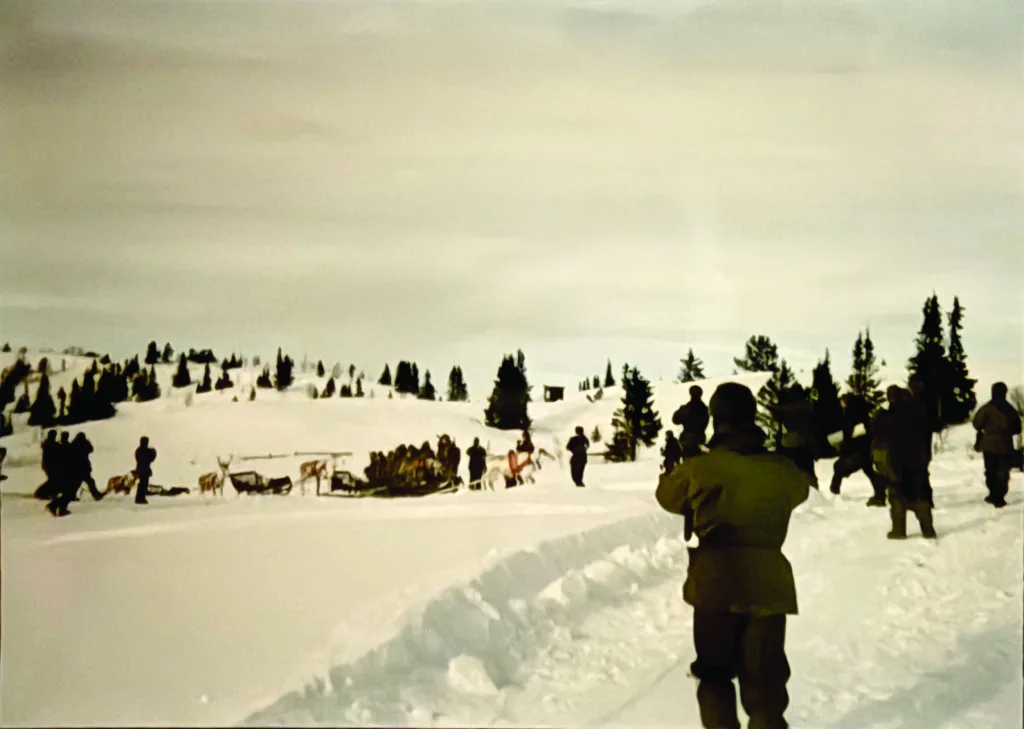
A month later, Robin was sent to basic training in New Jersey and Brad was sent to Fort Leonard Wood, a U.S. Army training installation located in the Missouri Ozarks. When Brad and Robin were both home from basic training, they asked Charlie, “How is this the buddy system?” Charlie replied, “Well, that’s the first lesson. Life’s not fair!” Having graduated from Basic Training with Honors, Brad returned to Wahpeton joining the 816th Engineering Unit. He remained in the National Guard for twenty-six years. 1978 was a busy year for our young guardsman. As a civilian, Brad worked for Conzemius Oil in Wahpeton, North Dakota hauling fuel oil and working on heating systems. Brad took two weeks off work for Guard Camp that summer, and another week for a honeymoon when he married my sister, Jan, in October. Also, an unexpected opportunity to go to Germany on a National Guard mission came up. He got the call while at work. Brad paused the call and immediately asked his boss, “Hey, Dick, I’ve got a chance to go to Germany with the Guard. You going to let me off for that?” Dick replied, “You’ll never be able to afford to go to Germany on what I pay you, so you better take it.” A unit from Devils Lake had been asked to go to Germany in support of the full-time active-duty troops already there who needed time off regular duties for a training mission. The Devils Lake unit was short four people so Brad and another Wahpeton guardsman, Wayne, were asked to go, along with two from yet another unit. Brad and Wayne were assigned to work in a mechanic’s shop. When asked about memorable moments, Brad said, “Well, being able to speak German would have been a benefit because we shared a shop with German civilians that didn’t want to cooperate so they wouldn’t speak English.” Overall, it was a good experience that included a weekend in Paris. During the summer of 1980, Brad took a two-month civilian break from the National Guard. During that break he made the decision to continue his commitment and signed on again, staying in the Wahpeton 816th Engineering Unit. A graduate of Wahpeton, ND high school, Brad spent his first twelve years as a Guardsman in Wahpeton’s 816th Engineering Unit. Some of his best memories are earth-moving projects they completed in various North Dakota locations using bulldozers, scrapers, road graders and other heavy equipment. During the late 1970’s, Engineering Units frequently worked alongside the North Dakota State Water Commission, routinely activated across the state to handle infrastructure emergencies and rural civil engineering projects. One project Brad worked on was an earthen dam near Bisbee in Towner County. The 816th worked on the project for over a year, sometimes twice a month in the summer. Once the heavy equipment was there, the men were flown to and from the project by helicopter. The original earthen dam had begun to erode so they dug a large basin area and used the fill to build up the dam. Today, the Big Coulee Dam is owned by the city of Bisbee and is known as a recreation area popular for camping and fishing. Lakota began as a training project. There was a hill next to a slough, so they began by pushing the hill into the slough. It took a long time, sometimes around the clock, operating with other units. In the end, the National Guard Engineering Units built out the Lakota city airport on that site. Seeing all the work the National Guard engineering units were doing, commercial contractors formed a lobbying group against them for taking so many jobs which would otherwise be theirs. As a result, much of the publicity around some of these projects makes it a point to say the National Guard wasn’t involved. Other projects the 816th worked on included building a baseball diamond in Jamestown, a walking path around a hospital in Grand Forks, covering up some dump sites, and building a rifle range on top of an older range. The unit also worked in the Devils Lake area when the waters started rising, placing culverts under roads. The 816th Wahpeton Unit eventually changed and became more about carpentry and other building skills. By 1986, the Vigen family had grown to include daughters, Katie and Laura. Seeing opportunities for professional growth, too, Brad and Jan had bought their own truck and joined the ranks of independent truckers on U.S. highways. Those opportunities also made relocation to Lincoln, Nebraska a reality. In Lincoln, Brad joined the 24th Medical Unit of the National Guard. The 24th was an air ambulance unit and Brad trained as a helicopter mechanic while there. Most of Brad’s time there was spent doing routine maintenance on helicopters. They had a hangar at Lincoln airport where flights were made daily. Brad went to Fort McCoy, Wisconsin with the 24th Medical Company for a training exercise all about mobilization, getting everyone there and back. In the event of a natural disaster or other situations when the National Guard is brought into action, many people from different jobs and locations must be coordinated and brought together in a short window of time to accomplish the mission. A great deal of planning takes place to get machinery, supplies, food, water, fuel and personnel moved into place. When traveling as a large group, planning the route, where and when to take breaks, is also a large part of the operation. In August of 1989, the Vigens moved again, this time to Princeton, MN. Brad joined the St. Cloud Transportation National Guard Unit. A highlight of his time in that unit was a two-week training exercise in Norway as part of the Norwegian Reciprocal Troop Exchange (NOREX), the longest running military exchange partnership, involving approximately 100 members of the Minnesota National Guard and 100 members of the Norwegian Home Guard. The program was established in 1974 to promote military readiness, bilateral goodwill, tactical knowledge sharing, and deep cultural understanding between the U.S. and Norway. 100 Norwegian troops train at Camp Ripley Training Center while 100 Minnesota troops are in Norway. At Camp Ripley, training for the Norwegians features weapon familiarization, tactical/urban operations, and Black Hawk or Chinook helicopter integration. In Norway, Minnesota troops are trained in Arctic/winter environments, focusing on cold-weather survival, cross-country skiing, building snow caves, skijoring, ice-water survival drills, and advanced winter warfare courses. Brad’s experience took place at Winter Camp Torpo near Lillehammer, Norway while the Winter Olympics were taking place in Lillehammer. At Torpo, the Minnesotans were divided into squads of seven. The squads then worked as a team during 4 days of winter survival training which started with learning to cross-country ski, then move as a group on skis carrying all their gear, food, and supplies. Brad was very glad he had taken the time to train hard before the trip. His gear included a reindeer hide he bought from a man pulling a sleigh full of the hides for sale. The Norwegian instructors told the Americans that a hide would keep them warmer and dryer on those cold winter nights in a tent or a snow cave. They were right! Moving in their squads of seven, two led the squad breaking trail through the snow, two more pulled a sled loaded with supplies, and one was the brakeman who would slow the sled on downward slopes. The seven would periodically switch places as they progressed. At night, they worked as a team to pitch a tent or build a snow cave, start a fire, make a wind break, and heat water to make something warm to eat and drink. The rotation of jobs continued for four days and three nights of winter camping. The squads covered a long distance every day. There were no roads out there, just wide-open spaces of snow on the mountain. There were cabins all over the mountains with vacationing families in them.
Tents were warmed by a small wood stove. The stove pipes had to be cleaned out every day with pine branches so the flame would burn until morning. The squad members took turns through the night as fire guard, keeping the fire going. One night a neighboring fire guard taught them all the importance of cleaning the stove pipes. The man couldn’t keep the fire going because the dirty pipe was choking out the flame. He was beating on the pipe so hard it came apart. The whole squad had to bail out of the tent and clean the pipes to start over warming it. One night was spent in a snow cave which they worked hard to build as described by Brad. “You’d start digging into the snow low on the slope, and then your entrance would be an incline, so you were going up. Then you’d make a shelf on each side where you’d sleep on the reindeer hide. The cold air would go down that entrance shoot while the warm air would stay up where you were on the shelf. The wood stoves were only used in the tents. You burned a candle in the cave, just to make sure you had enough oxygen in there. For a fresh air vent, “you’d put a ski pole in upside down, shove it through so you could reach the handle, then bobble that out a little bit.” A Colonel on the trip decided he and his entourage would sleep in a snow cave, too. They commandeered the one Brad’s squad had just finished, so the squad had to build a second cave for themselves. During their time in Norway, the Americans were given a tour of the King’s Guard providing security for the Olympics. One group was wearing white suits camouflaged in the snow. There were Guards in plain clothes walking the streets, and others in full dress uniforms, very visible at gates and other public areas. Even the barracks had rooms for a full squad and an area for them to form a platoon. They could mobilize in minutes if necessary. Brad said the King’s Guard was impressive. Overall, Norway was the most memorable event of Brad’s National Guard experience. Brad went on two other training missions while in the Minnesota unit. One of them was at the Joint Readiness Training Center (JRTC) in Fort Polk, Louisiana. Thousands of people from National Guard Units across the country were involved, including a medical team from Hawaii to practice mass casualty transportation. They went out at night with a convoy of trucks and would come across a staged event where something had blown up or some other disaster had taken place. Some guardsmen acted as victims with injuries who needed transport. These rescues were often in the woods or in a remote location so had to be found first. Victims were then brought back to base for triage and medical attention. Brad also went on a War Fighter exercise at Fort Leavenworth, Kansas. War Fighter is a simulation of a high-pressure wartime situation. The exercise was staged in an office type setting, directing activities within the exercise. Brad felt it was several layers over his head, but when he was asked to go, he agreed to. He says, “It always amazed me because it’s just groups of people that you’ve never met before. You’re thrown into a space and then you need to work together. It was very, very intense. You’re sitting there and you’re working with radios (computers weren’t a real big thing then) but you’re doing troop movements and then a supply line gets destroyed or you have to re-route. And there’s a guy behind you yelling at you so it’s total chaos. Now that your route’s going this way, where’s your food and your fuel coming from? If the troops must stop, where are they going to stop? You don’t have an area big enough for them all to pull into.” “At the end of the day, I saw this Colonel from Camp Ripley. I said, ‘Thanks for bringing me with but I’m sorry if I blew your whole deal.’ The Colonel replied, ‘You weren’t trained for any piece of this. You’re doing fantastic. Keep up the good work.’ I received a nice letter of commendation for that after the training.” Along the way, Brad completed Basic and Advanced NCO courses. He moved through the ranks from enlistment E1 Private to E3 after Basic Training, E5 Sergeant, to Specialist E5 and finally, in 1997, E6 Staff Sergeant. As I have been telling this story, it has occurred to me how much Brad’s career in the National Guard and his civilian career have mirrored each other. Just as his career in the National Guard moved from operating heavy equipment to transportation and mobilization of troops and all that travels with them, his civilian career progressed from over-the-road trucking to planning routes and obtaining permits for other truckers. From there, Brad and Jan opened Central Minnesota Logistics, a full-service freight brokerage specializing in over-dimensional and heavy-haul transportation across North America. After selling CML to their partners, Brad and Jan started a wheel repair business. Civilian retirement came after that business grew and was sold.
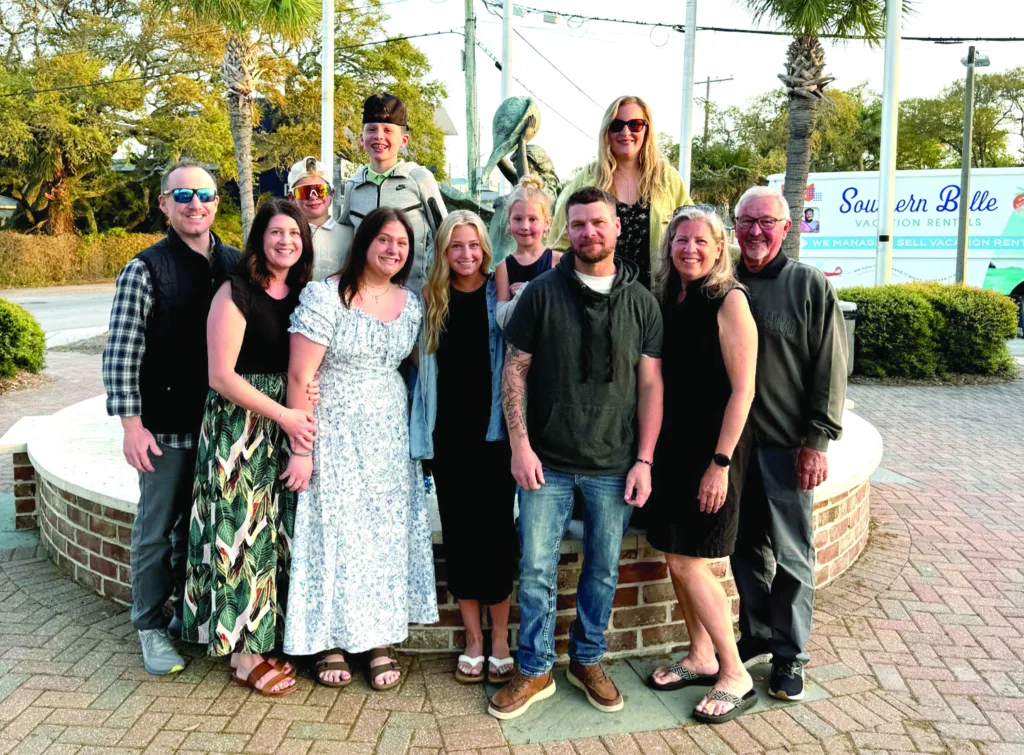
Brad Vigen retired from the Minnesota National Guard Transportation Unit on 20 June 2000 after 26 years of service. That is 26 years of one weekend a month and two weeks every summer, equivalent to 2.75 years of active-duty days. That is twenty-six years of missed weekends and vacations with his family, nearly three years of his life. Anybody who calls National Guards and Reservists “part-time soldiers” is mistaken. Even though they are not active in full-time duty, they have made a full-time commitment that can call them away from home and jobs at a moment’s notice to serve their communities and country in some of the worst times in many of our lives. We owe these men and women our gratitude for their time, commitment, preparedness and readiness to protect and defend all we hold dear. On the personal side, we loved having Brad and Jan here on our farm during harvest for several years. He shared his truck driving skills getting crops to the elevators and bins while Jan helped me with support services like keeping everybody fed, running for parts and performing other “gopher” duties. I am so very proud of my wonderful friend and brother, Bradley Morris Vigen. Our family and our country is better because of his devotion to both!
Read the Full Tribute to Service feature: https://northernsentry.com/3d-flip-book/tribute-to-service-2026/