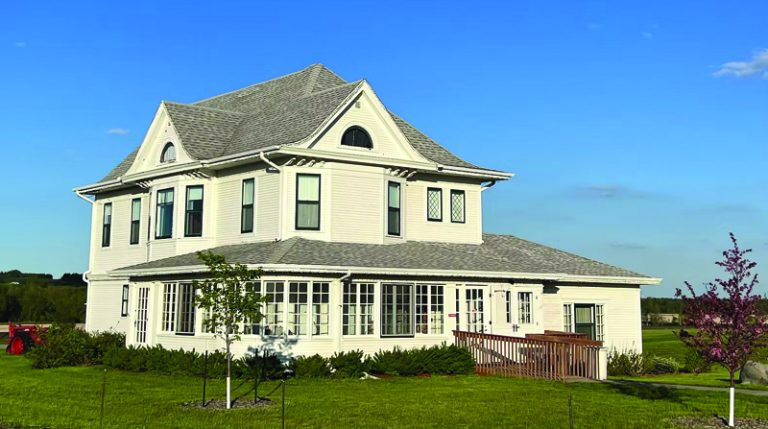
“Since 1951, the Ward County Historical Society has helped to maintain and preserve the history of Ward County and the region. The Society maintains the Pioneer Village Museum in Burlington, North Dakota. The museum boasts several buildings, all of which house artifacts and items of historical importance.”
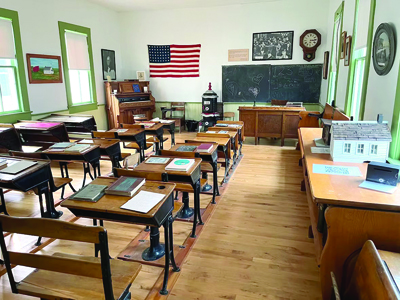
The original Pioneer Village was located on the North Dakota State Fairgrounds. It was a representation of the history of the area, with several buildings including a church, the Imperial Ward County Courthouse and the Samuelson house as cornerstones of the village.
My first tour of the village was during the North Dakota State Fair in 1977, and it took me the better part of an afternoon to just walk through and read about the artifacts that were stored there. The Pioneer Village remained on the fairgrounds until 2019 when with the help of many volunteers and the purchase of land near Burlington, the Pioneer Village was literally picked up and moved to its’ present location just east of Burlington along Highway 2.
Thousands of volunteer hours have gone into the transition from the fairgrounds to the current site. I was able to sit down with Alyea Miller, Site Director for the Ward Country Historical Society who has been part of the WCHS since 2023, Sheldon Albertson, a current board member of the WCHS who has been involved since 2015, and Dan Caswell, President of the WCHS, who says he has been involved since 2012.
Ward County Historical Society photos
There was approximately 37 acres donated to the WCHS for the Pioneer Village and future developments, and of that only a small parcel has been developed for the current Pioneer Village. Beyond the Pioneer Village going east along the Highway 2 will hopefully someday be developed and have a nature area that would include hiking and biking trails. The exact acreage of the area developed for the Pioneer Village “could be around 10 acres” according to Alyea Miller.
Moving the Pioneer Village was not an easy task. “We had from August 15th of 2018 until June 15th of 2019 to find land, purchase land, get permits and move a dozen buildings” according to Caswell.
“A blacksmith shop, a car museum, post office” according to Albertson “we moved 10 buildings the first time,” “And we got done one week ahead of schedule” adds Caswell “Only because of Kevin Huwe” said Albertson.
“Kevin moved all of them. He was a major donator” according to Caswell “The Burlington EDC donated half of the land and I purchased the other half. Between the 2 of us we donated $200,000.00 to purchase the land.”
The current Pioneer Village museum consists of 17 buildings “and we’re still 15 buildings short of what we need” according to Caswell “we need a car museum and an agriculture museum” “And of course we’d like a visitor’s center someday, out front” adds Albertson. “The visitor’s center? Well, we’d like to design a building to look like an old hitchn’ post, you know give it that old look, and have a rail that you can tie your horse to in front of it” laughs Caswell “you know to keep people from driving into the building.”
The visitor’s center would be about 60 feet by 120 feet with meeting rooms and offices and gift center “and part of the reason I have envisioned it being that size is that we can have a year round antique mall, where people pay to rent a little 8 x 8 spot to put their antiques in, and they would also have to work at the museum like two days a month plus pay the rent and that way we could be open year round. We would have traffic year round and that would generate income to put up more buildings and pay more help…you know, give us a source of revenue.”
Albertson looks ahead to having a part-time librarian “because a lot of people want to know about their families. Quite a few come looking for information.”
The list of possible buildings, besides the car museum and the agricultural museum would include a gun museum for a collection that has been donated to the WCHS. “We’d like to have a horse barn” says Caswell “we want to build a farm” says Albertson. Caswell continues with the thought of building a livery stable, a soda fountain/tavern type building, a real post office, a bank, a gas station, general store..” Yah, it’s pretty easy to see that we are at least 15 buildings short, and maybe more.” Albertson would like to see a radio/TV repair shop “because we have then entire contents from the ColorTech TV store” says Caswell “I’ve got test equipment that just won’t quit. We’ve got old, antique radios and TV’s, old tubes.” The museum also needs a building to store and expand their collection of player pianos. The expansion plans are pretty much unlimited, and of course depends on volunteers and resources.
Both Albertson and Caswell cited the need for a newspaper building “because we have the printing press from Sanish, North Dakota” says Caswell. Albertson ads that this particular press was the one that created all the havoc about the (Garrison) dam going in “so it’s a pretty historical piece.”
The challenge for the WCHS is not only to build new buildings, but to maintain the buildings that they already have. “Eventually we are going to have to charge” says Albertson “right now we don’t charge. But when we start charging we would be able to hire help. There’s just too much for only volunteers.”
Even though the discussion went on for some time, we ended up talking about the carousel that the WCHS is re-building and hoping to have finished sometime this summer. “There’s an opportunity for people who are willing to paint one of the horses that are on that carousel” says Caswell.
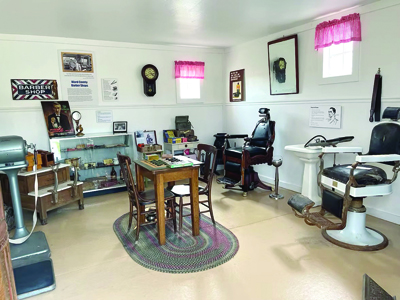
Ward County Historical Society photos
What Albertson, Caswell and Miller all emphasized is that many of the items we have grown up with, are really now valuable to the museum. “Take an Atari game from the 1980’s. It’s an antique to someone born like in 2000. We need to keep collecting new antiques” says Caswell.
For more information about touring the Pioneer Village, or for information on volunteering, go to the Ward County Historical website; wardcountyhistoricalsociety.com.
There is also information about the summer events at the Ward Country Historical Society.