The first time I ever saw a king cake, it was a cool, clear morning in a suburb of New Orleans.
One of my husband’s pilot training classmates grew up just outside the city, and his family graciously invited us to spend the weekend at their home. After a late night in the French Quarter, I was grateful to wake up to the smell of fresh coffee wafting in from the kitchen.
“Good morning! You want some king cake?”
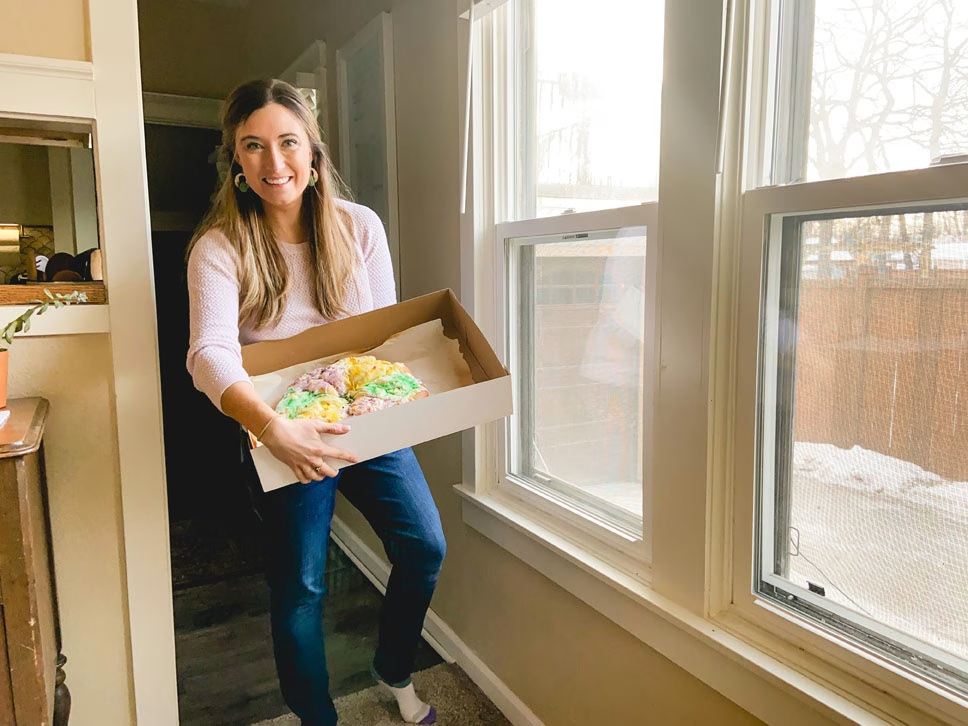
Amy Allender photo
“What’s king cake?” I asked.
“You’ve never had king cake?” our friend John said, incredulously.
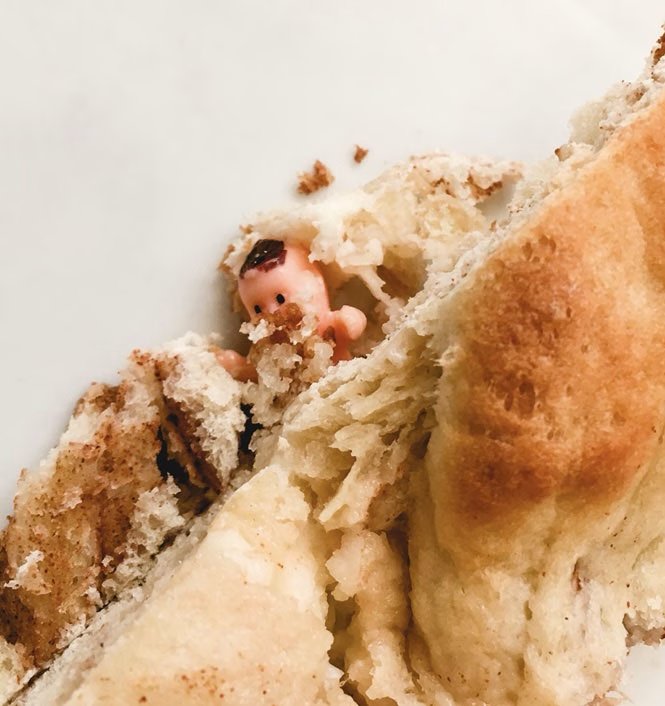
Without missing a beat, his mom cut generous slices for all of us. The cake was decorated in unmistakably celebratory colors—green, purple, and yellow—and as we ate, she explained the tradition. She told us about King’s Day and its significance, the symbolism behind the cake—both in spiritual and secular terms, and how a small plastic baby is hidden inside. Whoever finds the baby in their slice is responsible for bringing the next king cake to the following gathering.
In that way, King’s Day and king cake usher in a season—not just a single celebration. A chain of gatherings stretches from early January through Mardi Gras (Fat Tuesday), which leads into Lent before Easter.
Her explanation wasn’t rushed or formal. It was hospitality in its truest form—not just inviting us into her home, but into her culture, her rhythms, and something that mattered deeply to her family.
At the time, I didn’t realize how much that moment would stay with me.
Later, when we moved to Louisiana, king cake became commonplace between January and Mardi Gras. It showed up everywhere—at offices, churches, grocery stores, and kitchen tables. And when we eventually moved away from the South, that tradition came with us.
When we relocated to a place where king cake wasn’t part of the cultural fabric, I taught myself how to bake one. Partly because they’re delicious, and partly because I love the tradition itself. Every January, as I bake, I think of that kitchen in Louisiana. I haven’t been in that house for many years, but the kindness shown to us there remains—year after year—through a tradition I now carry forward.
That’s one of the quiet gifts of military life: the way it places us, again and again, near people willing to share who they are and what shapes their lives.
Living this way gives us the opportunity to be drawn into customs that aren’t our own. To learn traditions we didn’t grow up with. To be welcomed into kitchens, celebrations, and stories we might never have encountered otherwise.
Minot and our local friends have been generous in that way. They’ve shared lefse, Midsummer, and so many uniquely North Dakota traditions with us. In return, we’ve shared pieces of our own story. And more often than not, food becomes the bridge.
It’s funny how recipes seem to soak up memories. They taste like home; like a time gone but not forgotten; like a season. One bite can recall a place, or a version of yourself you didn’t realize you missed. Traditions do more than preserve nostalgia—they create belonging. They offer an on-ramp into community, something many of us crave, especially in a place where winters are long and so many people are far from where they started.
That’s the kind of kindness I hope to practice—the kind that doesn’t just open the door to a home, but to a culture and a story. The kind that says, This matters to us, and you’re welcome to it.
Military life may scatter us across the map, but I keep discovering that traditions tether us together. They remind us that belonging doesn’t always come from geography. Sometimes it comes from a borrowed custom, a shared table, or a cake baked in January that carries the weight of many places at once.
And sometimes, home tastes like sugar, coffee, and the generosity of someone who took the time to explain why something mattered.
For more reflections on military life, and living well in North Dakota, connect with me at amyallender.com or on social media @HeyMinot.